An Unexpected Connection
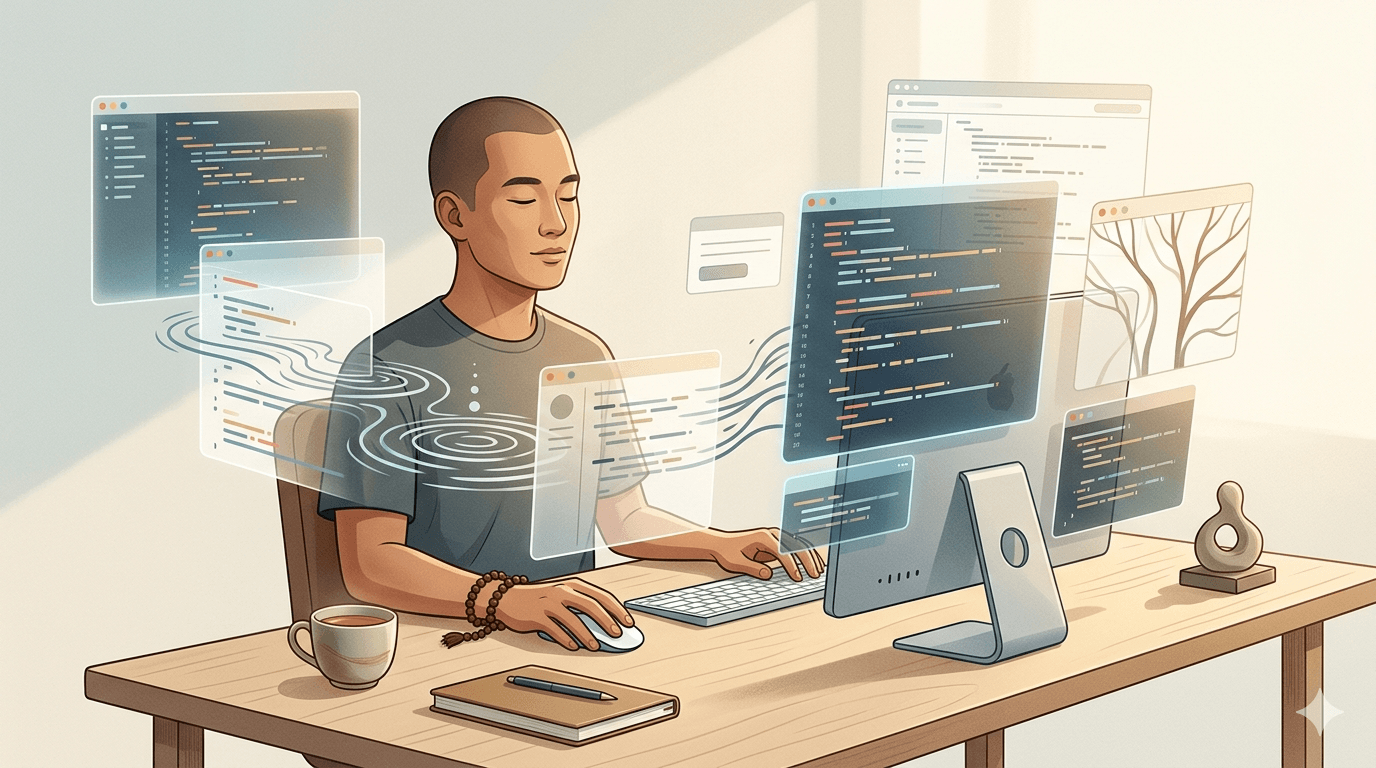
When I first started exploring Buddhism, I didn't expect it to change how I write code. But the more I practiced, the more I noticed parallels between ancient wisdom and modern software development.
The biggest lesson was simple: software is human work. It carries uncertainty, change, and mistakes. Buddhism gave me a better way to relate to all three.
Why This Matters in Engineering
A lot of engineering pain comes from attachment. We attach to our designs, our assumptions, our timelines, and sometimes even our bugs. When those things change, frustration follows. Buddhist practice taught me to be more flexible and less reactive.
Impermanence (Anicca)
Everything changes. In Buddhism, this is a fundamental truth. In software, it's Tuesday.
Requirements change. Technologies evolve. That "perfect" architecture you designed will need refactoring. Fighting this reality causes suffering. Accepting it brings peace—and better code.
Practical Application
- Write code that's easy to change, not "future-proof"
- Don't over-architect for requirements you don't have
- Embrace refactoring as natural evolution
- Document decisions so future-you understands why
What This Looks Like in Code
When the business rules are likely to change, I prefer small, explicit modules over giant abstractions. The goal is not to predict the future. The goal is to make change less painful.
1type PricingRule = {
2  name: string;
3  apply: (basePrice: number) => number;
4};
5
6const seasonalDiscount: PricingRule = {
7  name: "seasonal-discount",
8  apply: (basePrice) => basePrice * 0.9,
9};
10
11function calculatePrice(basePrice: number, rules: PricingRule[]) {
12  return rules.reduce((price, rule) => rule.apply(price), basePrice);
13}
This is a small example, but it reflects the mindset. Keep the structure open to change without forcing every possible change into a single giant abstraction.
Non-Attachment
I used to defend my code like defending my identity. Code review felt personal. Rejected PRs hurt. This attachment caused unnecessary suffering.
Now I see code as something that flows through me, not from me. I can advocate for solutions without ego. I can accept criticism without feeling attacked. The code improves, and so do I.
A Healthier Code Review Mindset
- Assume the reviewer is protecting the codebase, not attacking you
- Separate the idea from the identity of the person who proposed it
- Be willing to delete your own favorite code when a simpler option exists
- Measure success by outcome, not by how much of your original patch survived
Mindfulness in Debugging
Debugging used to frustrate me. Hours lost to typos. Anger at myself for "stupid" mistakes. Mindfulness changed this.
Now, when I hit a bug, I pause. I breathe. I observe my mental state without judgment. Then I investigate with curiosity instead of frustration. The bug isn't my enemy—it's a teacher showing me something I didn't understand.
Mindful Debugging Checklist
- Reproduce the issue in the smallest possible environment
- Change one variable at a time
- Read the error message slowly before changing code
- Check assumptions about data, timing, and state
- Pause if you feel yourself rushing or spiraling
Right Effort
The Buddha spoke of "right effort"—neither too much nor too little. In coding, this means knowing when to push through and when to step away.
- Stuck on a problem for hours? Walk away. The answer often comes during rest.
- Tempted to over-engineer? Ask if this serves users or just your ego.
- Burning out? Rest is not laziness—it's wisdom.
Right effort also applies to sprint planning, architecture decisions, and even the amount of tooling you introduce. A good engineering system does not demand constant heroic effort from the people maintaining it.
Beginner's Mind
In Zen, they speak of "beginner's mind"—approaching each moment with openness, without preconceptions. As developers, we often lose this.
"That's how we've always done it" kills innovation. Every new project deserves fresh eyes. The junior developer's "naive" question might reveal the flaw in your "sophisticated" system.
Compassion for Users
Buddhism emphasizes compassion for all beings. In software, our beings are users. They struggle with our interfaces. They get confused by our error messages. They suffer when our systems fail.
Developing with compassion means asking: "How does this feel from the user's perspective?" It means clear error messages. Forgiving input validation. Graceful degradation.
1function getFriendlyErrorMessage(error: unknown) {
2  if (error instanceof Error) {
3    return "Something went wrong. Please try again.";
4  }
5
6  return "We could not complete that action right now.";
7}
That kind of language is not cosmetic. It changes how people experience failure, and it reflects a more compassionate engineering culture.
Compassion for Users
Buddhism emphasizes compassion for all beings. In software, our beings are users. They struggle with our interfaces. They get confused by our error messages. They suffer when our systems fail.
Developing with compassion means asking: "How does this feel from the user's perspective?" It means clear error messages. Forgiving input validation. Graceful degradation.
The Middle Way
The Buddha rejected extremes—both extreme indulgence and extreme asceticism. In coding, this translates to balance:
- Between perfect code and shipping fast
- Between documentation and self-documenting code
- Between abstraction and simplicity
- Between testing everything and testing what matters
Most mature engineering decisions are not absolute. They are context-sensitive trade-offs. The middle way is not indecision; it is disciplined balance.
What Changed in My Work
- I refactor more calmly instead of defending old decisions
- I spend less energy trying to make code perfect and more on making it useful
- I debug with less self-judgment and more patience
- I think more about users, teammates, and maintainers
A Continuing Practice
I'm not a Buddhist teacher, just a developer who found wisdom in ancient teachings. The practice continues—both on the cushion and at the keyboard. Each day brings opportunities to code with more awareness, more compassion, and less suffering.
The result is not just better code. It is a better relationship with the work itself.

Prabhath Madhushan
Full Stack Developer | Software Engineer
A passionate developer building scalable web applications with modern technologies. Always learning, always creating.